Bees Academy by Ambev
Ambev
Gamified Leadership Development System
Service Design
Instructional Design
Skills
Research
Service Design
Gamification
Design Thinking
Miro
Instructional Design
Contribuição
Planning and Conducting the research phase
Facilitating discovery and ideation workshop sessions
Conducting in-depth interviews
Processing collected information Ideating the gamified user flow
Validating concepts
Coordinating the implementation of the design solution
About
Ambev, a Brazilian brewery under the Anheuser-Busch InBev umbrella, holds the title of the world's biggest beer producer, dominating roughly 69% of Brazil's market. The company is currently transitioning toward a more digitalized sales and distribution system. The Service Level department's management requires education on digital transformation processes.
Design Challenge
Utilizing the Design methodology for creating a training course for Service Level Management leaders. The course required to:
- Maintain strong alignment with leadership
- Increase value and excellence in the program
- Boost interaction through gamification strategies
- Develop ways to verify learning outcomes
Research Goals
Before the research starts, we made an effort to plan and understand the research goals, which company information we would need to collect, and which research tools and techniques we could use.
What is the profile of the leadership and what motivates them?
What level of dedication is expected for their development?
What are the expectations regarding the program?
What are the expectations of the project sponsors?
How does the leadership develop themselves?
User Research
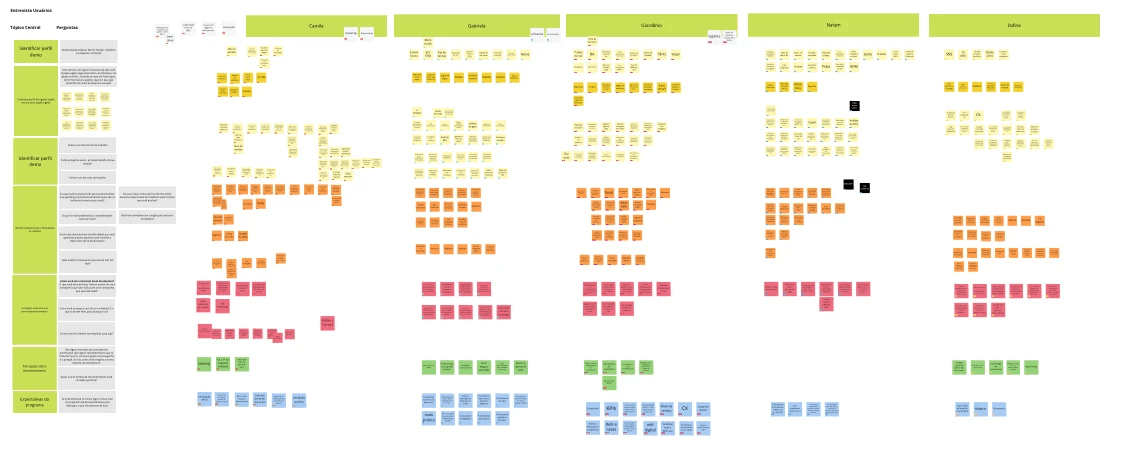
We conducted in-depth interviews with 5 leaders with diverse profiles to understand their backgrounds, motivators, pain points and needs. Additionally, we interviewed the project sponsor to align expectations regarding the outcomes.
Moreover, we joined the WhatsApp group they use to observe their communication.
Experience Guidelines
We defined some guiding criteria to start the program's ideation, considering various parameters:
User Journey
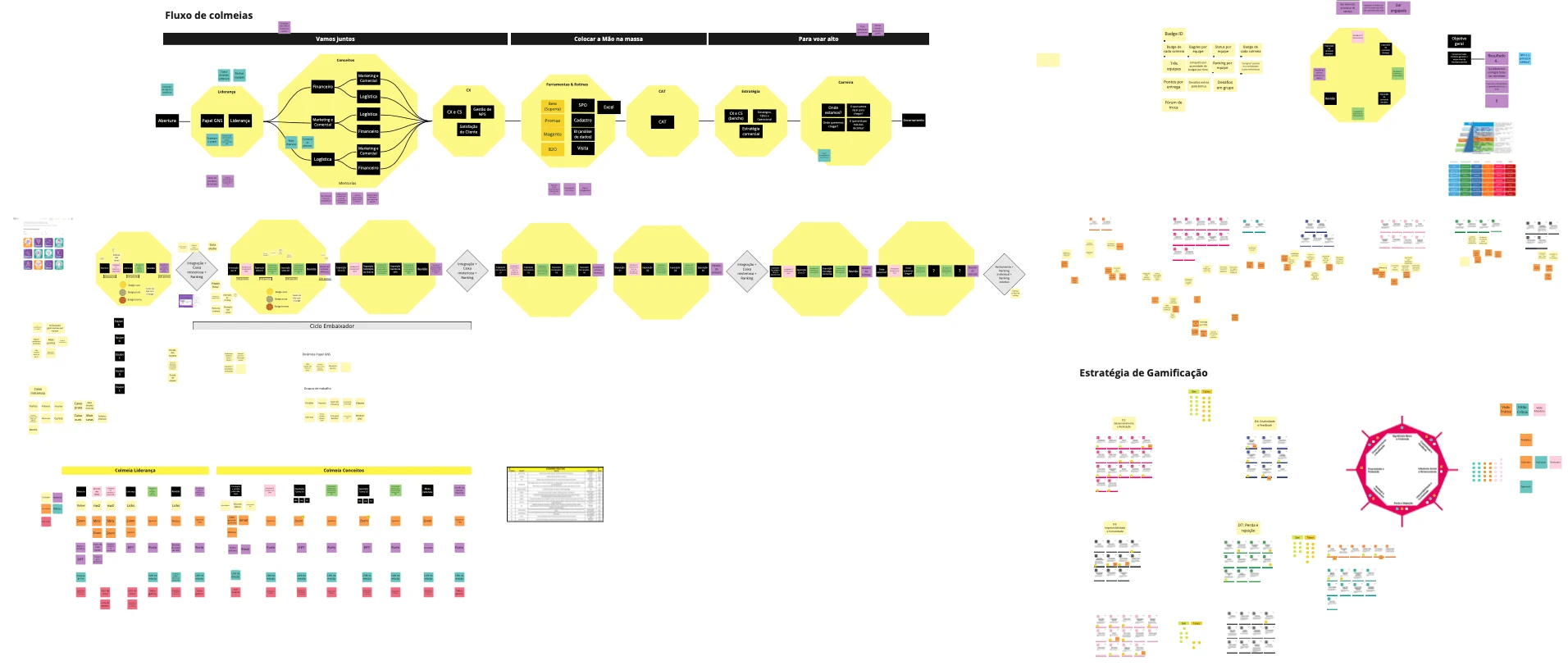
We conducted an ideation session based on the program's timeline, thinking about creating the best learning journey and using gamification techniques to improve engagement.
Evaluation
We used Bloom's Taxonomy as a basis to think about activities for memorization and application of knowledge.
Final results
Macro themes
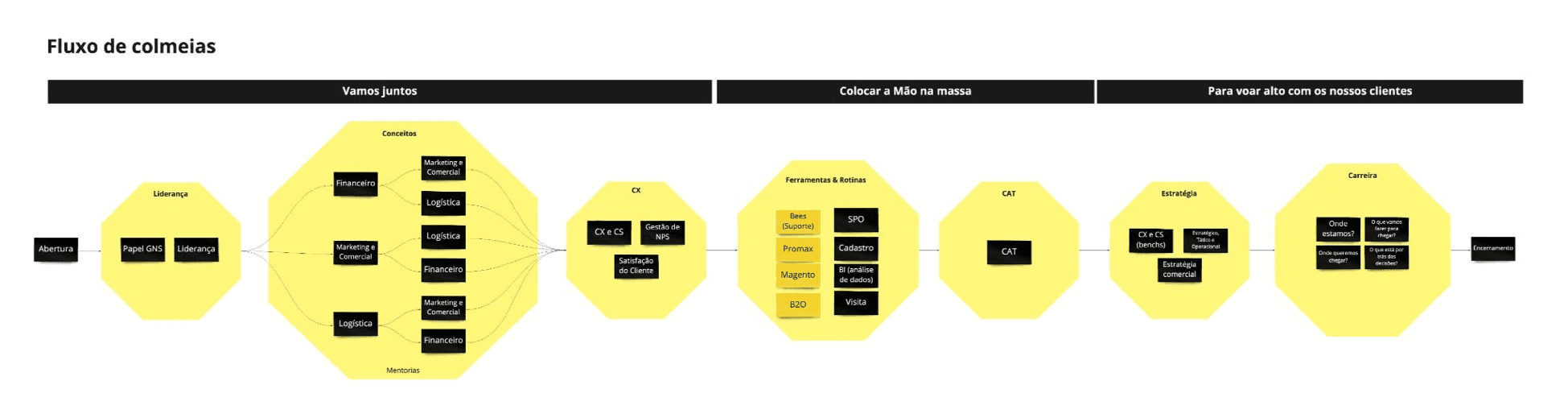
The program's journey was divided into macro themes, discussed each month of the program, with each theme having a series of activities:
1. Moments of Content Exposure
2. Memorization Activities
3. Theme Challenge: A more elaborate activity requiring participants to apply the acquired knowledge in their day-to-day work
Each activity generated points for the participants, defined based on aspects such as relevance, challenge, and effort required. This allowed us to calibrate the point system effectively according to the proposed tasks.
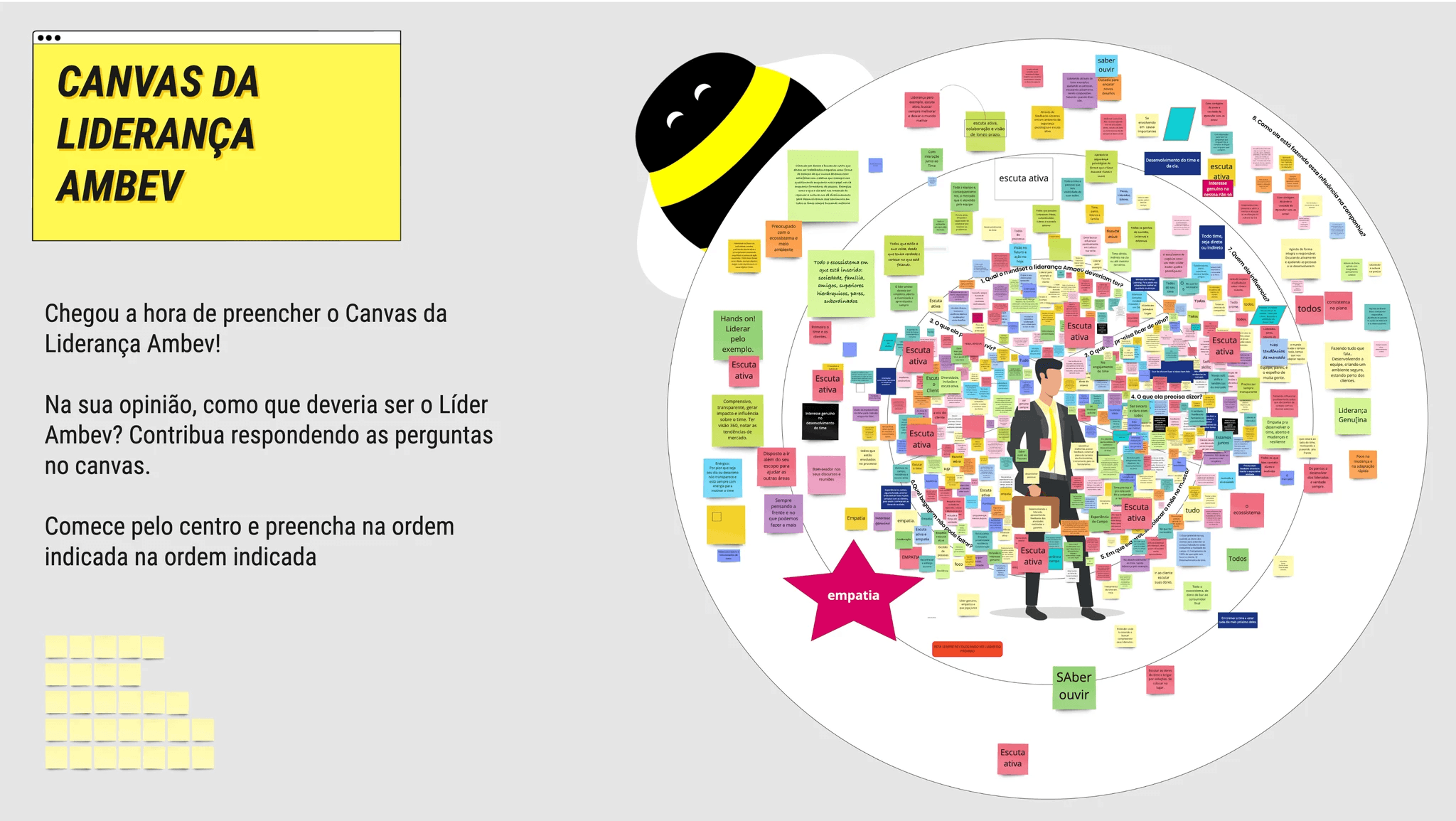
A challenge that managers needed to fill a collaborative canvas, based on the Empathy Map, on Miro and tell what the attributes of a good leader have.
